Editing styles by genre & format · 30 references · 6 clusters
Corporate & Industrial Films
Status: placeholder catalog, not a verified footage audit. 30 candidate references across six technique clusters. All links are YouTube search results, not direct official clips. Many entries are broad campaign or channel examples, not exact video uploads. Editing observations below are audit hypotheses only.
Future audit worksheet
Select one precise video version and verify publisher, direct link, date, rights and runtime. Log in/out timecodes, shot lengths, cut motivation, B-roll correspondence, process chronology, claims, graphics legibility, safety framing and end-card. Label simulations, stock and AI visuals accurately. Do not infer engineering claims from montage alone.
30 references
01
Corporate Brand Story & Identity
5 references
Technique exercise: watch one clip below twice, once for the story and once counting the cuts. Log three cut points against its "watch for" note, say what each cut does, and propose one alternate cut.
Watch how the film moves from Superdome landmarks and archive glory to tight portraits of Gleason, holding back the eye-tracking screen insert (around 1:09) as its one piece of product proof before the Microsoft #empowering end card.
Class question
Why does the film delay showing the technology until the human story is established, and what would change if it opened on the device?
New clip: Same Microsoft 'Empowering' campaign; the current link was an unofficial, Chinese-subtitled corporate montage, so it now points to the Steve Gleason film that defined the campaign (no official upload is still online).
Watch the animated search bar typing queries over each clip (from 0:03) act as the thread linking hundreds of unrelated moments, before the closing line 'To everyone reimagining what's possible' around 3:23.
Class question
How does one repeated graphic device turn a montage of strangers into a single brand statement?
Watch the opening text cards (0:01 to 0:20) state the claim before the atom-by-atom stop-motion story begins, then see the same atoms re-form into THINK and the IBM logo around 1:26 to 1:29.
Class question
How does building the logo out of the same atoms as the story change the way the brand claim lands?
Replaced: IBM's 'Let's Create' spots survive only as unofficial re-uploads; A Boy and His Atom is IBM's most-cited brand film and is on IBM's own channel.
Original reference: IBM — Let's Create campaign films
Watch fast cuts alternate human moments with glowing wireframe overlays of machines (a car around 0:07, a power plant around 0:37), tying hidden engineering to everyday life before the Ingenuity for life end card at 1:20.
Class question
Which shots carry the engineering and which carry the emotion, and how does the balance between them shift toward the end?
Watch the girl's narration carry a chain of imagined GE machines (an underwater wind farm, a plane with bird wings, a giant jet engine around 0:37) before the cut back to the real girl in her bedroom around 0:51 and the Imagination at work card.
Class question
What does seeing industrial products through a child's imagination let GE say that a factory shot could not?
New clip: The current link was an unrelated healthcare corporate film; GE's best-known brand story, Childlike Imagination, links industrial products to one person (agency upload, no GE upload found).
02
Manufacturing Process & Operational Continuity
5 references
Technique exercise: watch one clip below twice, once for the story and once counting the cuts. Log three cut points against its "watch for" note, say what each cut does, and propose one alternate cut.
Watch the FPV drone carry one moving line through the plant while stage labels (Body Shop around 0:10, Paint Shop near 0:57, Marriage around 1:38) mark the process order, until a finished car drives out.
Class question
How does following the line in one travelling shot explain production order better than a series of separate shots?
New clip: The current link was an unofficial motorcycle compilation; BMW Group's own plant fly-through shows the full car production order in one clip.
Watch the drone thread casting, stamping, paint and general assembly (each labelled on screen) as if in one flight, and spot the motion-blurred pushes that hide the joins between halls.
Class question
Where are the hidden cuts in this 'single flight', and what does each one let the film skip?
Watch the film follow parts from arrival (the Dreamlifter landing around 0:35) through fuselage join, systems, paint and the rollout in BA livery around 3:23, compressing the build with time-lapse.
Class question
How does the edit keep you oriented on one aircraft while time-lapse compresses so much work?
Replaced: Boeing's 777 automation clip is a technical feature; British Airways' official 787-9 build film is the widely shared reference for aircraft assembly geography.
Original reference: Boeing — aircraft assembly factory videos
Watch the whole build compress into moving time-lapse, from fuselage sections arriving by rail at 0:02 through systems and seats going in, to the finished 737 taking off around 2:10.
Class question
How does time-lapse let the film keep every assembly stage in order without losing the viewer?
Replaced: Honda Cog duplicated another module; Boeing's official 737 build film is a short, iconic factory process film in moving time-lapse, matching the Toyota production-workflow brief.
Original reference: Toyota — production system factory videos
Watch one continuous CG camera take sand to ingot, wafer, a dive into the transistor layers (around 1:02 to 1:11) and back out to the boxed processor, changing scale without a single cut.
Class question
Which images here are illustration rather than process evidence, and how would a viewer know?
Kept: Official Intel upload, 2:10, of the classic sand-to-chip process film.
03
Industrial Machinery, Macro & Precision
5 references
Technique exercise: watch one clip below twice, once for the story and once counting the cuts. Log three cut points against its "watch for" note, say what each cut does, and propose one alternate cut.
Watch the cutting alternate wide shots of excavators with tight inserts of teeth, tracks and timber, while on-screen weights (600 lbs per block around 0:27) raise the stakes on every pull.
Class question
How do the close inserts make slow, heavy machines feel tense and precise?
Watch the cut land roughly every two seconds, alternating wide shots of backhoes balancing on their buckets with in-cab cutaways of the operators (0:03, 0:25, 0:50).
Class question
What do the in-cab cutaways add to the precision claim that the wide shots of the machines cannot?
Replaced: Volvo Epic Split duplicated another module; JCB's official Dancing Diggers film cuts machine choreography on the beat, fitting the mechanical-movement cutting brief of the John Deere slot.
Original reference: John Deere — manufacturing and machinery films
Watch two robots pass a tray of cans between them while the cutting mixes wide two-shots with extreme close-ups of the cans (around 0:43), before the TrueMove and QuickMove captions near 2:10.
Class question
Which shots prove the precision claim, and which are there only for rhythm?
Watch the opening build both rivals with spec captions (Boll's world ranking around 0:19, the KR Agilus's reach and repeatability around 0:34), then cut the rally between Boll's face and the robot arm like a sports film.
Class question
How does the edit make an industrial robot read as a character with intentions?
Watch fast macro inserts move from raw material to mechanism: gold grain poured in the foundry around 0:16, dial printing around 0:41, the movement assembled around 0:58, then the finished watch on a wrist at 1:11.
Class question
How does the order of the macro shots turn a list of processes into a claim about quality?
Replaced: Mercedes-Benz Chicken duplicated another module; Rolex's official watchmaking film is a macro material-to-mechanism manufacturing film, fitting the Bosch slot's detail-editing brief.
Original reference: Bosch — manufacturing technology promotional films
04
People, Safety & Workplace Documentary
5 references
Technique exercise: watch one clip below twice, once for the story and once counting the cuts. Log three cut points against its "watch for" note, say what each cut does, and propose one alternate cut.
Watch white test cards (such as 'Test 3: The Exit' around 1:44) split hidden-camera interviews into chapters, then the payoff moves from office to stadium with 'Guy Luchting, you got the job' on the big screen around 3:10.
Class question
How do the chapter cards turn raw hidden-camera footage into a story with a clear payoff?
Replaced: 3M employee stories are neither iconic nor available as an official clip; Heineken's The Candidate is the most-cited workplace and recruitment documentary-style film (no official upload found).
Original reference: 3M — employee innovation stories
Replaced: Dumb Ways to Die duplicated another module; WorkSafe Victoria's Homecomings is a famous workplace-safety film on the regulator's own channel, replacing the low-confidence Shell safety-day clip.
Original reference: Shell — worker safety campaign films
Watch a blue glass globe rolled or passed from one employee to the next (around 0:03, 0:21 and 0:32), stitching separate interviews into one continuous handoff.
Class question
What does a physical object passed between speakers add to a string of short employee testimonials?
Watch the film cut between the forensic artist, the women describing themselves and his sketching hand, then hold on their faces as the two portraits are shown side by side (around 1:51 to 2:15).
Class question
How does the editor let reaction shots, rather than narration, deliver the brand's point?
Replaced: The Unilever food-poverty clip is a minor brand update; Dove Real Beauty Sketches is Unilever's most-cited documentary-style film (official Dove Italy upload, English audio with Italian subtitles).
Original reference: Unilever — employee purpose stories
Watch staff interviews (named lower thirds at 0:05 and 0:12) intercut with the beagle's route from aircraft cabin through the terminal to the passenger (around 0:22 to 1:24), keeping each handoff in screen order.
Class question
How does the edit keep the airport geography clear while an item passes through several hands?
Replaced: The DHL awards promo is a generic title-card montage; KLM's Lost & Found is the widely shared staff-operations story with an official upload.
Original reference: DHL — logistics employee stories
05
Technology Explainers, Data & Infrastructure
5 references
Technique exercise: watch one clip below twice, once for the story and once counting the cuts. Log three cut points against its "watch for" note, say what each cut does, and propose one alternate cut.
Watch the 'i am...' title lines (around 0:31 and 1:20) chapter a montage of real AI applications, each tagged with its lab or company credit, before the closing 'i am ai' card at 3:26.
Class question
How do the repeated 'i am' titles make a list of unrelated use cases feel like one argument?
New clip: Same brand; the current link was a technical keynote talk, so it now points to NVIDIA's own I AM AI keynote opener, its best-known infrastructure film.
Watch the tour open on a tablet search (0:01), glide through captioned rooms (Networking Room around 0:30, Server Floor around 0:40) with hands-on inserts of technicians, and close back on the tablet around 1:40.
Class question
How do the location captions and the tablet bookends keep a viewer oriented in a building they will never visit?
Replaced: The Cisco link was a third-party certification lesson; Google's official data center Street View tour is a widely seen infrastructure explainer.
Original reference: Cisco — networking explainer animations
Watch the film cut from real factory floors to building-management screens (floor plans around 1:15, the chilled water system around 1:29, an energy chart around 1:47), and note which visuals are software views rather than live action.
Class question
Where does the film switch from physical evidence to on-screen software, and does it signal the switch clearly?
New clip: Same brand; swapped a push-button factory tour for Schneider Electric's own smart-factory film, which shows the physical-to-digital switch the card asks about.
Watch the film compress one family's day, from the 7:00 AM wake-up on a glass wall (around 0:16) into the evening, cutting to close inserts of glass screens tagged with product captions such as 'Architectural Display Glass' (around 0:49).
Class question
Which shots show technology that existed in 2011 and which are pure concept, and how does the editing blur that line?
Longer than 5 min: A 5:32 corporate vision short that is itself the reference; Corning's only shorter official version is a montage that drops the day-long structure.
Replaced: Hitachi's 30-second whiteboard teaser is generic and little-cited; Corning's A Day Made of Glass is the most-cited corporate technology vision film, on Corning's own channel.
Original reference: Hitachi — social innovation technology films
Watch expert interviews alternate with real places overlaid with light-trail graphics (a beam through a forest around 1:14, colour washing over buildings around 2:17), turning an invisible network into visible motion.
Class question
What does each light-trail overlay claim the network is doing, and is that claim shown or only implied?
Kept: Official Ericsson upload, 3:32, on 5G use cases.
06
Corporate Launch, Investor & Short-Form
5 references
Technique exercise: watch one clip below twice, once for the story and once counting the cuts. Log three cut points against its "watch for" note, say what each cut does, and propose one alternate cut.
Watch fast camera moves and motion-blurred transitions carry the laptop from studio to park to clifftop (around 0:52 to 1:39), with spec lines such as 'Up to 2000 nits peak brightness' (0:17) placed in the shot rather than on separate cards.
Class question
How do the motion transitions keep energy rising while every scene still lands on the product?
Watch white text cards ('Some things are greater than others', then 'Flex' is greater than 'Flat' around 0:22 to 0:25) alternate with dark, barely lit glimpses of a folding edge, saving the date card 'Aug 10.2022' for 0:37.
Class question
What does withholding a full view of the product do for an event invitation?
Watch the film move from an aerial view of the building (0:01) through a 3D grid graphic (0:16) into the bot swarm, with caption boxes (bots at 4 metres per second around 1:08) explaining each stage before the vans leave around 1:38.
Class question
How does the outside-in route through the building compress a whole operation into under two minutes?
Replaced: The AWS fulfillment tour runs 11 minutes, over the cap, and no short official Amazon tour exists; Ocado's official 'Inside The Hive' is the widely shared warehouse-robotics tour.
Original reference: Amazon — operations and fulfillment center tours
Watch the build from crowds and roll-out to ignition around 0:39, then the cutting between cheering staff, Starman over Earth (1:05 and 1:20) and the twin booster landings around 1:36 to 1:43.
Class question
Why does the film cut to people reacting at the biggest moments instead of staying on the rocket?
New clip: Same brand; Falcon Heavy & Starman is SpaceX's most-viewed official launch film and a sharper anticipation-to-payoff edit than the Crew-1 recap.
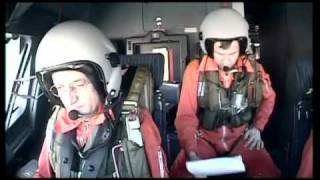
Watch time-and-place captions ('27 April 2005, Toulouse' at 0:11, '10H29 Take-Off' around 1:10) anchor a cross-cut between the helmeted crew in the cockpit and the crowds on the ground, peaking at lift-off around 1:24 and the crew's return around 2:05.
Class question
How does the order of build-up, event and hero shot turn a test flight into a milestone story in two minutes?
New clip: Same brand; the A380 first-flight film is Airbus's most famous milestone and a clearer announcement-event-hero structure than a delivery clip.

 2:24