Editing styles by genre & format · 30 references · 6 clusters
China & Hong Kong Cinema
Modul: 30 rujukan filem × 6 kelompok. Fokus: bahasa suntingan video untuk analisis trailer, teaser dan petikan filem. Tarikh penyediaan: 17 November 2026.
Disiplin istilah: Nama "editing style" di bawah ialah label analisis yang dicipta untuk pengajaran, bukan dakwaan nama rasmi industri atau kredit khusus trailer editor. Filem ialah bahan rujukan. Editing cues merupakan perkara yang pelajar disarankan cari dan uji pada sampel; ia tidak mendakwa analisis shot-by-shot ke atas setiap trailer. Jika trailer tidak dapat disahkan, pautan ialah carian YouTube (bukan video rasmi yang telah diverifikasi). Filem Hong Kong/China berbeza daripada genre dan boleh tumpang tindih dengan modul Martial Arts yang akan disediakan secara berasingan.
30 references
01
Hong Kong Action & Heroic Bloodshed
5 references
Technique exercise: watch one clip below twice, once for the story and once counting the cuts. Log three cut points against its "watch for" note, say what each cut does, and propose one alternate cut.
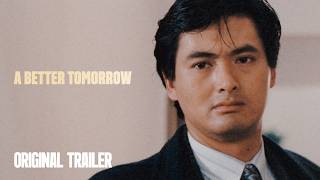
Watch how the trailer spends its first half-minute on studio logos, then stacks stunt after stunt (the hillside shanty-town chase, the bus, the mall glass) in wide shots that let each fall land before the next cut.
Class question
Why do Jackie Chan's stunts read better in wide shots held to completion than in many fast close-ups?
Watch how the big red text cards ('From John Woo... of Hong Kong action cinema') split the trailer into rising waves of gunfire, from the teahouse to the hospital.
Class question
How does the trailer keep raising intensity while still showing you where everyone is in the space?
Watch how the trailer alternates Andy Lau and Tony Leung on their phones, each hunting the other's identity, and holds black frames between beats instead of rushing.
Class question
How does cutting between the two moles make you unsure whose side you are on?
New clip: Same film; swapped a re-upload channel for the official 20th-anniversary 4K restoration trailer from its Taiwan distributor.
02
Wuxia & Martial-Arts Storytelling
5 references
Technique exercise: watch one clip below twice, once for the story and once counting the cuts. Log three cut points against its "watch for" note, say what each cut does, and propose one alternate cut.
Watch how the trailer opens on Wong Fei-hung's disciples drilling on the beach, then builds through lion-dance, ladder and warehouse fights, with vertical Chinese captions introducing each player.
Class question
How long does the trailer make you wait before Jet Li's Wong Fei-hung actually fights, and what does that delay add?
Watch the slow opening of mountains, calligraphy and wanted posters give way to the bamboo-forest fight, where bodies leap out of frame and the cut lands them somewhere else.
Class question
How does cutting a leap into pieces make a fighter seem to fly without any visible wires?
Replaced: No official upload of the Swordsman II trailer exists; King Hu's A Touch of Zen, the Cannes-honoured wuxia famous for its fragmented bamboo-forest fight, has an official Masters of Cinema trailer.
Watch how the trailer lets long landscape shots and a calm voice set the pace, then releases rooftop chases, the tavern fight and the bamboo canopy in short bursts.
Class question
How does the trailer balance quiet, held images against the moments of attack?
Watch how red brush-stroke title cards sweep across the screen between blocks of colour-coded images (blue, red, green, gold), so the cards set the rhythm.
Class question
How do the colour shifts in the trailer hint that the same story will be told more than once?
Watch the rain fight told almost entirely in fragments: splashing puddles, a hat brim, a foot on stone, a burst of red, in slow motion, before the wide shot of Ip Man standing alone.
Class question
What do you understand about the fight from details alone, without ever seeing the full action clearly?
New clip: Same film; swapped the Rotten Tomatoes re-upload for co-presenter Annapurna's official teaser built on the opening rain fight.
03
Wong Kar-wai & Urban Auteur
5 references
Technique exercise: watch one clip below twice, once for the story and once counting the cuts. Log three cut points against its "watch for" note, say what each cut does, and propose one alternate cut.
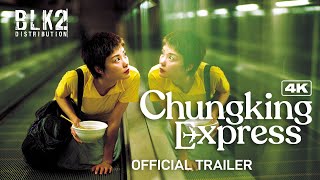
Watch how bright leaf-pattern cast cards break up long, private moments in a cramped flat, and how a smeared step-printed street run (around 1:50) shows the film's other speed.
Class question
How does the trailer let you feel two different city rhythms without explaining either story?
Watch the wide-angle, smeared night images jump abruptly between hitman, partner and mute drifter, with a dense run of short cuts around 1:10 to 1:16 before a calm motorbike-in-tunnel shot.
Class question
Does the jumpy, blurred cutting tell you more about the city or about the characters' state of mind?
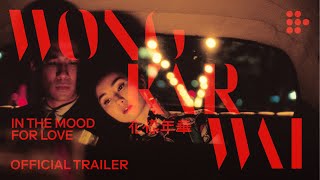
Watch how few cuts there are: long held glances in corridors and doorways, slow cigarette smoke, and red credit text that drifts over the images instead of interrupting them.
Class question
Why does this trailer work with so little dialogue and so few cuts?
New clip: Same film; swapped a re-upload channel for the official Block 2 4K restoration trailer.
04
Historical Epics & Period Spectacle
5 references
Technique exercise: watch one clip below twice, once for the story and once counting the cuts. Log three cut points against its "watch for" note, say what each cut does, and propose one alternate cut.
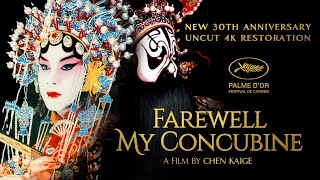
Watch the trailer jump from opera-stage close-ups to decades of upheaval (childhood training, wartime, the Cultural Revolution crowd around 1:10), with elegant quote cards bridging the leaps.
Class question
How does the trailer compress fifty years of history while keeping the two performers at the centre?
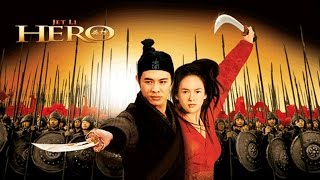
Watch the trailer cut back and forth between Zhang Ziyi's sleeve-and-drum dance in the Peony Pavilion (around 1:02 and 1:22) and chases through bamboo, birch and snow, with a press-quote card near the end, so the dance and the fights share one rhythm.
Class question
Where does the trailer let the dance turn into a fight, and what carries you across that change?
Watch how three slogan cards ('There is no survival without courage', 'No victory without sacrifice', 'No power') split the trailer into steps, each followed by bigger battle images and colder faces.
Class question
Does this trailer sell the glory of battle or the cost of it, and which images tell you?
Watch the trailer cross between strategists in quiet rooms, huge fleets and formations seen from above, and the burning river, so planning and battle feel like one chain.
Class question
How does the trailer show you the geography of a huge battle without getting confusing?
Watch how the near-monochrome grey images are held long, with the yin-yang symbol, umbrellas and blades returning as shapes, before the duels break out in the second half.
Class question
How does a grey, ink-wash look change the way you feel the pace of the fights?
New clip: Same film; swapped the festival trailer for US distributor Well Go USA's official trailer.
05
Contemporary Crime & Social Thrillers
5 references
Technique exercise: watch one clip below twice, once for the story and once counting the cuts. Log three cut points against its "watch for" note, say what each cut does, and propose one alternate cut.
Watch how the trailer moves between quiet, dim rooms where triad elders talk and sudden bursts of violence, and how the vote itself (around 1:33) is staged as a calm show of hands.
Class question
Why does this trailer feel so tense even though most of its shots are slow and quiet?
Watch the long middle section built from clinical close-ups (needle, IV line, syringe pump, a finger on the button) around a prisoner on a gurney, before the title explodes into powder.
Class question
How do small procedural inserts create more dread than an action scene would?
Watch the trailer intercut boardroom power struggles between police chiefs with a hijacked police van and street explosions, speeding up from around 1:00.
Class question
How does cutting between meeting rooms and the street turn an office argument into an action film?
Watch how the trailer rests on Zhou Dongyu's reactions (to the classroom, the bullies, the crowd that turns to stare) while lines like 'I'll protect you' carry over the cuts.
Class question
Whose face does the trailer return to most, and how does that choose whose story you feel?
Watch the trailer mix scam-compound life, gambling-table inserts and phishing code on screens, broken by single-word cards such as 'Desire' (around 1:15), as the violence rises.
Class question
How does the trailer make you see the scam from both the victims' side and the scammers' side?
Kept: Same film; the GSC cinema chain's official Malaysian release trailer is already a fitting clip.
06
Modern Sci-Fi & Blockbuster
5 references
Technique exercise: watch one clip below twice, once for the story and once counting the cuts. Log three cut points against its "watch for" note, say what each cut does, and propose one alternate cut.
Watch how a stated countdown ('Earth will collide with Jupiter in 37 hours...') and radio voices carry the cuts from frozen cities to the burning engines, getting faster after Wu Jing's name card.
Class question
How does stating a deadline early change the way you read every shot that follows?
Watch the slow opening across reed fields, then the contrast between the neon-lit concession and the dark warehouse across the river, with red cards ('October 1937, Shanghai', '4 days and 4 nights') pacing the build.
Class question
What does the trailer gain by showing the crowd watching from across the river instead of only the battle?
Watch how cards ('Ruled by gangs', 'Run by landlords', 'and one hero') set up gags and fights, with smash cuts from overhead gang formations to cartoon-style action.
Class question
How does the trailer use card timing to land both the jokes and the action beats?
Replaced: Detective Chinatown 3 is not a widely cited editing example; Stephen Chow's Kung Fu Hustle is the landmark Chinese-language comedy-action blockbuster and has an official Sony trailer.
Watch huge year cards (2058, 2075) jump the story across decades, while the trailer moves between a space-elevator disaster, a digital-life lab and a pilot in a cockpit.
Class question
How do the giant year cards help you follow several storylines happening years apart?
Watch a fast opening flurry of fire, blood-red smoke and fighters give way to slower god and king introductions, then build to the beast and the battlefield before the gold title.
Class question
How does the trailer introduce so many gods and heroes without losing you?

 Official upload2:44