Editing styles by genre & format · 30 references · 6 clusters
Technology & Gadget Advertising
Scope: 30 proposed references across six technique clusters. This is a placeholder research catalog, not an audited clip library. Search URLs do not establish official video identity. Editorial lenses and prompts are hypotheses, not verified footage observations. Some entries refer to campaign series; choose an exact video version before auditing.
Future audit template
Capture direct official URL, publisher, release/version, duration, licensing context, precise in/out timecodes, shot-by-shot cut notes, audio beats, claim substantiation, feature visibility, text readability, end-card and CTA. Never describe a technique as verified without viewing the source.
30 references
01
Product Hero Reveal & Premium Pacing
5 references
Technique exercise: watch one clip below twice, once for the story and once counting the cuts. Log three cut points against its "watch for" note, say what each cut does, and propose one alternate cut.
Watch how raw rock and drifting particles hold the screen before they assemble into the word 'Titanium' around 0:15, and only then the frame edge and camera bump appear in slow macro passes.
Class question
What does withholding the whole phone for most of the film make the viewer want, and when is that want finally paid off?
Watch how bold 'Demo' title cards (Live Translate, Unbeatable Processor) split the film into chapters, each followed by a real-world scene and a tight insert of the phone screen proving the feature.
Class question
How do the numbered title cards change the way you read a long list of features?
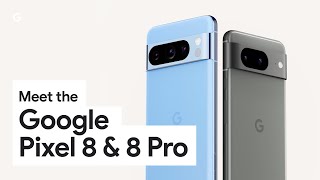
Watch the rhythm of lifestyle shot, UI insert and clean product beauty shot repeating feature after feature until the pastel hero line-up and 'The only phone engineered by Google' end card.
Class question
In each feature beat, which comes first, the human benefit or the phone, and why?
Watch the cross-cutting between the running heroine, the marching drones and Big Brother's screen tighten until the hammer throw, then the film ends on a text card and rainbow logo instead of the computer.
Class question
Why does a computer launch ad that never shows the computer still work as a product reveal?
Replaced: The Sony Alpha 7 IV video is a generic product film (and the official one runs 6:39); Apple's 1984 is the most cited tech launch spot ever made and a model of a reveal that never shows the product.
Original reference: Sony — Alpha 7 IV product video
Watch how sweeping aerial landscapes (dunes, snowfields, coastlines) alternate with tight shots of the triple-camera drone and controller, so the footage itself proves the hardware before the dark end-card reveal.
Class question
How does the film use the drone's own footage as evidence for its product claims?
New clip: The current link was the later Mavic 4 Pro film; this is DJI's own Mavic 3 Pro introduction film.
02
Macro Detail, Match Cuts & Material Transitions
5 references
Technique exercise: watch one clip below twice, once for the story and once counting the cuts. Log three cut points against its "watch for" note, say what each cut does, and propose one alternate cut.
Watch how a thin line of light grows into glancing edges and curves of the chassis, then rhymes with keys, ports and the logo before the full laptop finally appears in its last seconds, with no hard cut detected in the whole piece.
Class question
How do light and shape carry you from one detail to the next when the film never uses a hard cut?
New clip: The current link was a later MacBook Pro film; Apple no longer hosts the M3 reveal, so this 33-second copy of the October 2023 event reveal is used.
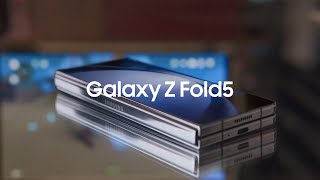
Watch the scale rhymes as a living-room TV, office monitors and a building of football billboards hand their picture over to the unfolded phone screen in the hand, ending on 'Join the flip side'.
Class question
Which cut most convincingly makes the folded phone feel as big as the screens around it?
New clip: The current Samsung Nepal upload cuts to local retail offers after 12 seconds; Samsung Italia's verified upload carries the full 55-second film.
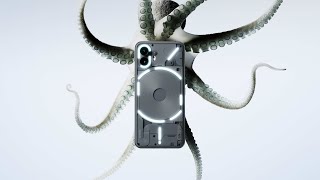
Watch the dark macro glints of the transparent back give way to a pale studio where an octopus wraps the phone, and the Glyph light pattern only becomes readable at the very end.
Class question
How long can macro detail run before the audience needs to see the whole phone, and how does this spot stretch that?
Watch the glowing motor seen through the handle and the animated airflow lines in the ring, each paired with a small caption, before the attachments click on one by one with their own airflow colour.
Class question
Why does showing the invisible airflow make the engineering claim easier to believe?
Watch the slow-motion close-ups of coloured balls bouncing past hydrants, gutters and a frog alternate with wide San Francisco streets filling up, so the colour itself becomes the product before 'like no other' and the Bravia set appear.
Class question
How does the film sell a television without showing a single picture on its screen until the end card?
Replaced: The current Bose link was an unboxing video and the Bose launch film is generic; Sony Bravia 'Balls' is one of the most cited tech ads for selling a screen's colour through pure material imagery.
Original reference: Bose — QuietComfort Ultra Headphones launch film
03
Feature Demonstration & UI-to-Reality
5 references
Technique exercise: watch one clip below twice, once for the story and once counting the cuts. Log three cut points against its "watch for" note, say what each cut does, and propose one alternate cut.
Watch the dad's frowning reactions to each spoiled group photo, the over-the-shoulder insert of faces being swapped on screen around 0:14, and the payoff of the perfect shot with 'The only phone with Best Take'.
Class question
How do the reaction shots of the dad set up the problem so the screen insert can solve it in a few seconds?
Watch the blurred, low-vision point of view resolve into sharp selfies whenever Guided Frame locks on, building a life montage from first date to newborn before 'Guided Frame with Google AI'.
Class question
Why is the feature more convincing when the blur and the sharp frames are the story instead of a demo?
Replaced: Apple's only official Action Mode film is a 5:25 documentary; Google's Super Bowl spot 'Javier in Frame' is the most widely seen recent ad that proves a camera feature through the footage itself.
Original reference: Apple — iPhone Action Mode commercial
Watch the cross-cutting between the lost traveller and the taxi driver, with phone-screen inserts and burned-in subtitles carrying each translated line before the overhead taxi shot and 'Translate calls, just like that'.
Class question
How does cross-cutting the two speakers make an on-screen translation feel like a real conversation?
Watch the whole day play out from the wearer's eye line, with each feature (weather, a message reply, a map, a friend's location, a video call at sunset) appearing as a floating card over the live street footage.
Class question
How does keeping the camera locked to one point of view make the interface feel like part of the world, not graphics added on top?
Replaced: The Surface Pro 9 introduction is a generic product film, and the replacement 'Parisian Love' is already used in other modules; Google's 2012 Project Glass 'One Day' concept is the defining UI-over-reality film, with every feature shown as an overlay on first-person footage.
Original reference: Microsoft — Surface Pro 9 introduction
Watch the edit keep returning to the camera on the pelican's back, its beak always centred, with only brief ground-level shots of the handler before the long take-off and flight over the lake at sunset.
Class question
Why does a mounted camera that never changes position make this footage a stronger product demonstration than a cut-in of the camera itself?
Replaced: GoPro's HERO12 launch video runs 9:51 and the replacement 'Fireman Saves Kitten' clashes with another module; GoPro's 'Pelican Learns To Fly' is a famous official film where the camera's own strapped-on footage is the whole ad.
Original reference: GoPro — HERO12 Black launch video
04
Kinetic Typography, Motion Graphics & Data Claims
5 references
Technique exercise: watch one clip below twice, once for the story and once counting the cuts. Log three cut points against its "watch for" note, say what each cut does, and propose one alternate cut.
Watch single words and short phrases flash on black or white cards in time with the track, interrupted only by split-second product and keynote shots, so a 2-hour event is read in under two minutes.
Class question
How long does each word stay on screen, and at what point would it become unreadable?
New clip: The current link was an unofficial 2020 event montage; Apple no longer hosts 'Don't Blink', so this complete 1:59 copy of the 2016 film is used.
Watch the Google search bar float over news, sport and viral footage as queries are typed letter by letter ('what kind of s...', 'unsung heroes', 'can anyone be a hero'), so the interface becomes the narrator.
Class question
How does the half-typed query change the way you read the footage underneath it?
Replaced: A Made by Google event highlights reel is generic; Google's Year in Search films are the best-known tech ads built on typed search queries over a montage, and the 2019 edition is Google's own upload.
Original reference: Google — Made by Google hardware event highlights
Watch the camera race through a CG chip landscape while spec blocks (Ada Lovelace architecture, DLSS 3, Full Ray Tracing) slide in and out, each held only a couple of seconds before the RTX 4090 card and 'Beyond Fast' land.
Class question
Which numeric claims are readable at this speed, and which are there only as texture?
Watch the spaced-out role cards (HEALER, HELPER, TEACHER, LEARNER, COMPOSER) divide the film into chapters, each followed by captioned real-world AI applications, until 'i am' and the orchestra close it.
Class question
Why do one-word role cards explain an abstract chip better than specifications would?
Replaced: The current link was an unrelated news clip and the Snapdragon 8 Gen 3 film is obscure; NVIDIA's 'I AM AI' keynote opener is the best-known motion-graphics film that turns processor capability into human use cases.
Original reference: Qualcomm — Snapdragon 8 Gen 3 launch film
Watch the laptop dissolve into flying tiles and icons, then the CPU, GPU and NPU blocks slide in as labelled cards before the tiles rebuild into tasks and the laptop with its Intel Core Ultra badge.
Class question
How does the film keep three chip acronyms clear without a single spoken number?
New clip: The current link was the older 13th Gen Core film; this is Intel's own Core Ultra launch animation.
05
Lifestyle, Human Use & Emotional Storytelling
5 references
Technique exercise: watch one clip below twice, once for the story and once counting the cuts. Log three cut points against its "watch for" note, say what each cut does, and propose one alternate cut.
Watch quick cutaways to the caged iPhone rig in the operators' hands interrupting the fisheye performance footage, so the film keeps proving what shot it before the 'Shot on iPhone 18 Pro' super near the end.
Class question
Where exactly does the film first establish that this footage came from the phone, and how often does it remind you?
Watch the film stay entirely on screen: typed searches, the Assistant's 'Ok, I'll remember that', and old family photos held for several seconds each, while an elderly man's voice carries the story to 'A little help with the little things'.
Class question
How does the slow pace of the photos change the feeling of a product demo into a memory?
Replaced: A generic Pixel Superfans testimonial is not iconic; Google's Super Bowl spot 'Loretta' is the best-known tech ad built from an assistant's interface and a user's memories.
Original reference: Google — Pixel Superfans campaign films
Watch the film cut between Delhi and Lahore as a granddaughter's searches (the old city gates, a sweet shop, the weather, a flight) appear as screen inserts that move the plot forward, until the two old friends meet at the door.
Class question
How do the screen inserts carry the plot so the characters barely need to explain what they are doing?
Replaced: Samsung's Galaxy Watch health films are generic, and the replacement 'Dear Apple' is already used in another module; Google India's 'Reunion' is the most celebrated tech film that tells a human story through the product in use.
Original reference: Samsung — Galaxy Watch health campaign films
Watch the long, dim opening of a tired commute and flat, with no hard cut detected until around 1:47, then how the apartment stretches into colour once the music takes hold and the cutting quickens through the dance.
Class question
Why does the film wait so long before the first visual change, and what would be lost if it started there?
Replaced: The Fitbit Sense film is generic; Spike Jonze's 'Welcome Home' for HomePod is one of the most awarded tech ads of its decade. Apple no longer hosts it, so this full 3:50 copy is used.
Original reference: Fitbit — Sense smartwatch promotional film
Watch the film cross-cut between Neymar's phone call with his father and other players' pre-match rituals, each wearing Beats, while the track 'Jungle' builds and the cutting tightens toward kick-off.
Class question
How does the music drive the move from quiet personal moments to a crowd-scale climax?
Replaced: The Sony WH-1000XM5 film is a generic product video; Beats' 'The Game Before the Game' is the landmark headphone ad of the 2014 World Cup, and this is the full film on the song's artist channel.
Original reference: Sony — WH-1000XM5 headphones promotional film
06
Short-Form Hooks, Comparisons & Conversion
5 references
Technique exercise: watch one clip below twice, once for the story and once counting the cuts. Log three cut points against its "watch for" note, say what each cut does, and propose one alternate cut.
Watch the locked two-shot on a white void cut in to single close-ups for each character's line, with PC's reactions doing the comedy, before the button on the Mac product shot.
Class question
Why does cutting to PC's reaction land the comparison harder than any spec on screen?
Replaced: The iPhone 15 Pro Titanium spot repeats slot 1 and the current link is a minor re-upload; Apple's 'Get a Mac' campaign is the defining comparison ad format in tech.
Original reference: Apple — iPhone 15 Pro Titanium commercial
Watch on-screen year captions (2007, 2013, 2015, 2016, 2017) jump one man's life forward while his rival phone frustrates him, each ellipsis set up by a small product problem, until he crosses the street with a Note8 and 'Upgrade to Galaxy'.
Class question
How do the year captions let the edit skip a decade without losing the story?
Replaced: The Z Flip5 film overlaps slot 7's 'Join the flip side' campaign; Samsung's 'Growing Up' is the most cited phone comparison ad of its era, here on Samsung New Zealand's own channel.
Original reference: Samsung — Galaxy Z Flip5 official ad
Watch the real friend 'pinched' between two fingers on the rock in the opening seconds, then the same pose moved inside the Magic Editor screen, followed by Circle to Search and Best Take beats tagged 'make it fun', 'make it yours'.
Class question
How does matching the real-world gesture to the on-screen gesture make the edit feel instant?
New clip: The current link was a later Pixel 11 feature; this is Google's own 30-second Pixel 8 AI spot whose opening beat is the Magic Editor before/after.
Watch how each lifestyle vignette (mountains, concert, vlogging, dance) carries a small feature super such as 3-axis gimbal or low-light performance, alternating with hand-held product inserts before the dark 'Osmo Pocket 3' end card and Buy Now screen.
Class question
Where does the film prove stabilisation through the footage rather than through a caption?
Watch the brand-new iPhone shown up front, the blend shown with an 'Instant Replay' and close-ups of the jar, then the button: the dust poured out and an iPhone screen saying 'Yes, it blends!'.
Class question
Why does using someone else's famous product make a blender demonstration spread so far?
Replaced: Anker charger promos are obscure, and the replacement 'Envelope' spot is already used in another module; Blendtec's 2007 'Will It Blend? - iPhone' is the textbook viral product-proof hook, blending the hottest gadget of the day.
Original reference: Anker — Prime charging products promotional videos

 0:35