Editing styles by genre & format · 30 references · 6 clusters
Game Cinematic & Launch Trailers
30 reference candidates in 6 groups. Links are YouTube searches, not verified original video URLs. Editorial notes are audit prompts, not observations confirmed by frame-by-frame review.
Teaching audit sheet
For every selected specific upload, capture publisher and URL, duration, source version, rights, timestamps in/out, edit point, shot length, cut motivation, audio bridge, narrative or gameplay clarity, graphics, logo timing, and evidence-backed teaching insight. Differentiate pre-rendered cinematics from captured gameplay.
30 references
01
Story Reveal & Narrative Escalation
5 references
Technique exercise: watch one clip below twice, once for the story and once counting the cuts. Log three cut points against its "watch for" note, say what each cut does, and propose one alternate cut.
After a slow walk through an overgrown forest, the trailer builds Ellie from inserts of her bloodied, tattooed hands on a guitar and only partial views of her face, and reveals the bodies on the floor and Joel in the doorway only after the song has set the mood.
Class question
How does delaying what is in the room change how you read the quiet guitar scene once the bodies appear?
Almost the whole trailer is held, slowly moving shots with only a handful of cuts: dead crabs, a handprint, a vanishing baby, then a wide beach of beached whales where the credits appear one by one.
Class question
With so few cuts, what links one strange image to the next, and why does the trailer refuse to explain any of them?
Kept: The E3 2016 reveal is the reference; the Kojima Productions upload could not be checked (download blocked), so the IGN copy stays, with a short audience shot near the end.
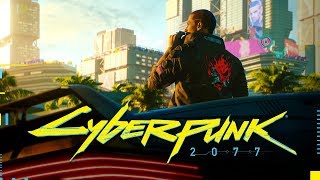
It opens on a crowded metro and a sunny tour of Night City, then the cut rate climbs sharply after about 0:55 into gunfights and gang violence before the glitching logo lands.
Class question
Where exactly does the trailer switch from selling the city to selling danger, and what in the edit tells you it has switched?
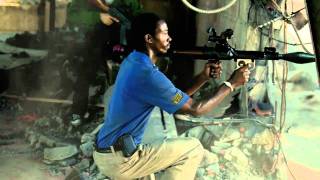
The main action plays in slow-motion reverse, from the girl lying dead on the lawn back up through the window and the hotel-room attack, while forward-running fragments of the same family are intercut until the final image shows them happy on the balcony.
Class question
Why does playing the tragedy backwards make the ending more painful than telling it in order?
Replaced: The original God of War E3 2016 reveal is a ten-minute gameplay demo (over the cap) and the current link was a reaction video, so it is replaced by the far more often cited Dead Island announcement trailer, whose reverse-chronology edit is a textbook story reveal; no checkable publisher upload was found, so the IGN copy is used.
Handwritten cards ('By 1899 the West had nearly been tamed') break the trailer into chapters, while Dutch's and the gang's lines carry over from campfire to town to robbery, tying separate places into one story of a gang running out of time.
Class question
How do the dialogue lines that run across cuts turn a tour of locations into a single story about the gang?
Kept: Official Trailer #3 is the reference and the current Rockstar Games upload is official and just over two minutes.
02
Gameplay Proof & Feature Sequencing
5 references
Technique exercise: watch one clip below twice, once for the story and once counting the cuts. Log three cut points against its "watch for" note, say what each cut does, and propose one alternate cut.
After a slow story opening over a burning Earth, the second half turns into first-person combat cut tighter and tighter to the music, each shot showing one weapon, kill or movement move before the 'Raze Hell' date card.
Class question
Does each fast gameplay cut still show a clear cause and effect, and where does the speed start to blur what the player is doing?
New clip: The current Bethesda link is a 25-minute QuakeCon gameplay presentation; Official Trailer 2 is the short gameplay trailer for the same game, and because Bethesda's own upload is age-gated and could not be checked, IGN's copy is used.
The trailer moves from a slow sea and beach opening, through Aloy's stealth and underwater swimming, to snow, ruins and a final machine charge, each environment change marking a new feature before the logo lands around 2:50.
Class question
How does the order of environments (sea, jungle, underwater, snow, battle) double as a list of what the player will be able to do?
New clip: The current State of Play gameplay reveal runs over 19 minutes; the official PlayStation announcement trailer for the same game is 3:29 and sequences the same world, machines and combat.
Dialogue between Jin, his uncle and Khotun Khan carries over cuts while the picture moves from the beach invasion to horseback travel, a low stealth crawl and a sword standoff, showing the game's honourable and stealthy styles side by side.
Class question
How does the trailer use Jin's inner conflict to justify showing both open samurai combat and hidden stealth?
New clip: The E3 2018 gameplay debut is a nine-minute demo (over the cap) and the current link was a GameSpot copy; the official PlayStation Story Trailer for the same game is 3:10.
Shots alternate between Peter and Miles swinging, gliding and fighting, cut on the music at roughly one or two seconds each, then the symbiote takes over and the trailer resolves through the spider logo to the title.
Class question
When the trailer cuts between Peter and Miles this fast, what keeps you sure which hero you are watching?
New clip: The current Gameplay Reveal runs over 12 minutes; the official PlayStation launch trailer for the same game is 1:13 and compresses its traversal and combat into a short, checkable cut.
Subtitled narration lines ('The Golden Order is broken to its core') pace a slow first half of landscapes and horseback travel, then from about 2:14 ('I command thee, kneel!') the trailer becomes a fast run of boss and creature fights ending on the release-date card.
Class question
How does the narration in the first half set up the boss montage so that the fast cuts feel like a payoff rather than noise?
Kept: The 2021 gameplay reveal is the reference and the current Bandai Namco Europe upload is official and under three minutes.
03
Music-Led Hype & Impact Cutting
5 references
Technique exercise: watch one clip below twice, once for the story and once counting the cuts. Log three cut points against its "watch for" note, say what each cut does, and propose one alternate cut.
Cut to Tom Petty's 'Love Is a Long Road', the trailer switches between cinematic Vice City shots and fake phone videos, social posts and Weazel News bulletins, before closing on Lucia and Jason's robbery and the VI logo.
Class question
What does mixing glossy cinematic shots with fake phone and news footage say about the world of the game?
Set to 2WEI's music, the trailer chains set pieces (soldiers in freefall from about 0:25, a jet chase around 3:05, a tornado tearing through the city near 4:05), with slow-motion beats letting each stunt read before the cutting speeds up again.
Class question
How do the slow-motion moments make each stunt readable before the edit speeds up again?
Cut to the Rolling Stones' 'Gimme Shelter', ordinary people (an office worker, a teenager, a chef) and celebrity cameos fight through a war zone in short punchy shots, ending on the chef's open-armed walk from the explosion and the 'There's a soldier in all of us' line.
Class question
Why does casting ordinary people instead of soldiers make the music-driven action feel like an invitation to the player?
Replaced: The Modern Warfare III gameplay reveal is a generic, rarely cited trailer, so the slot keeps the Call of Duty franchise with its most famous music-led launch spot, the live-action Black Ops ad set to 'Gimme Shelter', from Microsoft's official Xbox channel.
Original reference: Call of Duty: Modern Warfare III — Gameplay Reveal Trailer
Each music phrase introduces a hero or ability (Kiriko's opening, Mercy's wings, Sojourn's rail gun), shots of about one to two seconds pass the action between heroes, and an 'A new era of Overwatch begins' card sets up the free-to-play date.
Class question
How does the edit give each hero a moment of personality while keeping the pace of a team-wide montage?
The CG short introduces the Legends through their abilities inside one squad fight (green gas, a blue portal, a giant gun drop), cutting to reaction close-ups for jokes between hits before the play-free-now end card.
Class question
How do the reaction close-ups between action beats establish each character's personality without any exposition?
Kept: The 2019 launch trailer is the reference and the current Apex Legends upload is official and 2:19 long.
04
Cinematic Character & Emotional Performance
5 references
Technique exercise: watch one clip below twice, once for the story and once counting the cuts. Log three cut points against its "watch for" note, say what each cut does, and propose one alternate cut.
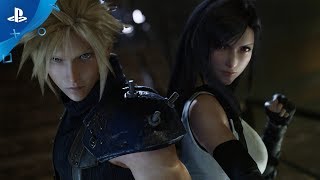
Intimate inserts and close-ups (Cloud's eyes, Tifa's gloved hands at the bar, Marlene looking up) are intercut with Midgar wides and real-time combat with its menus on screen, so each fight is framed by a character reaction.
Class question
How do the quiet close-ups between fights tell you who these characters are before the combat shows what they can do?
It opens on an eye reflecting fire, then crosses between Clive at different ages, rival factions and summon battles, with 'The legacy of the crystals has shaped our history' cards near 2:53 before the clash of Eikons and the logo.
Class question
What clues in costume, age and setting help you sort out the time jumps as the trailer crosses between storylines?
Brief flashes of a bloody blade cut into a slow, grey ride through bleak countryside, holding the tension until the fight finally explodes around 1:35, and a closing shot after the logo works as a stinger.
Class question
Why does the trailer flash the bloody blade early instead of saving it, and how does that change the long wait before the fight?
Replaced: The Diablo IV 'By Three They Come' cinematic runs 9:21 (over the cap), so the slot takes The Witcher 3's 'Killing Monsters', an equally famous CG character cinematic with the same held-tension-then-violence pacing, from the official channel.
Original reference: Diablo IV — By Three They Come Cinematic
After a '35 years ago' card, the cinematic lingers on Grommash Hellscream in long, slow-moving shots as he refuses the demon's blood, then breaks into slow-motion combat with Mannoroth before a huge pull-back over the orc army.
Class question
How does the editor hold the confrontation before the fight so that the first blow lands as a release, and what does the slow motion add after it?
Cal's quiet conversations (a candlelit scene near 0:41) carry over a fast run of lightsaber fights, traversal and new planets, so the dialogue sets the emotional meaning of the action underneath it.
Class question
How does hearing a quiet conversation over the fights change the way you read the lightsaber action shown at the same time?
Kept: The Official Story Trailer is the reference and the current EA Star Wars upload is official and 1:47 long.
05
Worldbuilding, Atmosphere & Genre Montage
5 references
Technique exercise: watch one clip below twice, once for the story and once counting the cuts. Log three cut points against its "watch for" note, say what each cut does, and propose one alternate cut.
Short gameplay clips sit under big serif cards ('Explore a vast new Kingdom', 'Over 150 new enemies', 'New bosses', 'New towns'), each card opening a new biome or mechanic, until 'The second game by Team Cherry' leads to the logo.
Class question
How do the title cards turn a gameplay montage into a clear list of promises without any voiceover?
The trailer opens with a long, calm skydive over the sky islands and an early logo, then descends through Hyrule into dark ruins and battles, cutting faster as Zelda's story and Ganondorf's reveal near 3:04 raise the stakes before the release date.
Class question
How does the descent from bright sky to dark depths work as both a tour of the world and a rise in story stakes?
Wide, almost still shots of lone explorers against arches, ringed planets and alien cities fill the first half, then a burst of very short cuts around 2:20 rushes toward the logo and release date.
Class question
Why does the trailer spend so long on near-still landscapes before it speeds up, and what does that say about the game it is selling?
The first 45 seconds are mostly lines of text on black ('When we first reached out to the heavens…', 'What lies at the center?'), then a big 'Explore' card around 0:49 releases a quick montage of planets, creatures and cockpit views.
Class question
What does holding back the gameplay behind text cards do to the impact of the 'Explore' montage that follows?
Misty mountains, temples and snowfields set a slow mood for the first minute, creature fights then escalate into blurred, fast boss clashes, and after the release-date card around 4:12 a short extra scene plays as a stinger.
Class question
Why place a scene after the release-date card, and what does it tell the audience that the main trailer did not?
Kept: The final trailer is the reference and the current upload is the official Black Myth channel, 4:46 long.
06
Launch Conversion, Brand Reveal & Cutdowns
5 references
Technique exercise: watch one clip below twice, once for the story and once counting the cuts. Log three cut points against its "watch for" note, say what each cut does, and propose one alternate cut.
Story beats between Master Chief, the pilot and the new AI give way to first-person combat and vehicle shots, a 'Become the Protector' card near 1:56 reframes them as the player's role, and the trailer ends on the date and Game Pass card.
Class question
How does the 'Become the Protector' card move the trailer from telling Chief's story to selling the player a role?
A tumbling, upside-down opening gives way to quick character moments with the companions, spells and monsters, a comic beat with a hamster near 1:25 lightens the tone, and the 'It's party time' end card turns the party of heroes into a pun.
Class question
How does the comic hamster beat and the 'party' tagline change the way you read the dark fantasy images before it?
Dim, slow shots of candlelit castle halls and Ashley's close-ups alternate with sudden bursts of gunfire, and the second half piles up explosions and monster attacks before a cut to black and the title near 2:08.
Class question
Where does the trailer hold on darkness and quiet, and how does that make the explosions that follow feel bigger?
New clip: The current 40-second launch trailer is too thin to study horror-to-action pacing, so the same game's official 3rd Trailer (2:26, Resident Evil channel), its main pre-launch trailer, is used instead.
The cut returns to the series' signature images (a hooded close-up, crowd blending, an eagle over Baghdad, rooftop leaps and air assassinations) in quick hero shots, then holds a long end card with the logo and October 5 date from about 1:21.
Class question
Which shots are chosen to remind long-time fans of the series' roots, and how does the trailer use them to position the game?
Subtitled radio lines ('That's how it's always been, 621') run over fast mech combat cut on the music, then the pace drops to slow hero shots of the mech in its hangar before the logo and date are held for the last few seconds.
Class question
Why does the trailer slow down to static mech shots just before the logo, and how long does it hold the brand at the end?

 Official upload4:02