Editing styles by genre & format · 30 references · 6 clusters
Animation & Motion Graphics
30 candidates in six groups. Links are search links, not verified official clips. Editing lenses are audit questions rather than confirmed frame-by-frame findings. Some entries identify a sequence or series rather than a fixed online upload.
Shot-level audit worksheet
Verify exact publisher, video URL, version, rights and timestamps; log each edit, shot length, sound bridge, graphic legibility, character eye-line, action geography, cut motivation, and teaching takeaway. Do not attribute an editing technique as verified without viewing the footage.
30 references
01
Character Performance & Emotional Timing
5 references
Technique exercise: watch one clip below twice, once for the story and once counting the cuts. Log three cut points against its "watch for" note, say what each cut does, and propose one alternate cut.
Watch how the cutting slows as the toys slide toward the fire, holding on single faces before the group join hands around 2:34 and the claw's light cuts in.
Class question
Why does the edit stay on silent reaction shots for so long instead of cutting to the fire?
Kept: Same sequence; the current upload is the full Married Life montage at 4:23, and Pixar's own uploads are side-by-side or progression versions rather than the film cut.
Kept: Same scene; current upload is the complete dinner scene in 3:36 and no official Pixar upload was found.
02
Action, Choreography & Spatial Clarity
5 references
Technique exercise: watch one clip below twice, once for the story and once counting the cuts. Log three cut points against its "watch for" note, say what each cut does, and propose one alternate cut.
New clip: Same film, but the runaway-train chase is the film's best-known action set piece and a cleaner example of spatial clarity than the low-view Screenslaver compilation.
Replaced: The LEGO Movie opening is not a widely cited action-editing example; Akira's motorcycle chase is one of the most homaged action sequences in animation, here in an official Netflix upload.
Original reference: The LEGO Movie — Opening action sequence
03
Graphic Match Cuts & Visual Transitions
5 references
Technique exercise: watch one clip below twice, once for the story and once counting the cuts. Log three cut points against its "watch for" note, say what each cut does, and propose one alternate cut.
Watch how the direction of WALL-E's fire-extinguisher trail and EVE's loops carries from one shot to the next, while the dance is intercut with the captain on the Axiom looking up what dancing is.
Class question
How does matching the direction of movement across cuts make a dance with no music beats on screen feel continuous?
New clip: Same Define Dancing sequence; the previous link was an audio-only soundtrack upload with a still image, replaced by an upload of the film scene.
Watch the camera rush into Ego's face as he tastes the dish around 0:30, cutting straight to him as a boy in his mother's kitchen, then snapping back to the dropped pen.
Class question
What links the present shot and the memory shot so the jump in time reads instantly without any dialogue?
Kept: Same scene; the current upload is a tight 73-second cut of the tasting flashback and no official Pixar upload of the film cut was found (Pixar's own is a side-by-side).
Watch Paprika pass from one image surface to another (a truck's painted side, a billboard, a shop window, a mirrored row of reflections around 1:22) so the credits flow as one continuous ride through the city.
Class question
How does Kon move Paprika between places without a conventional cut, and what does that tell you about the film's dream logic?
Replaced: The Soul 'Great Before' clip is not a cited transition example; Satoshi Kon's Paprika opening titles are a widely studied showcase of image-to-image transitions in animation.
Kept: Same work; the current upload is Netflix's official clip of the family fight, with the film's hand-drawn overlays and split panels.
04
Motion Design, Kinetic Type & Explainers
5 references
Technique exercise: watch one clip below twice, once for the story and once counting the cuts. Log three cut points against its "watch for" note, say what each cut does, and propose one alternate cut.
New clip: Same work as the original record (Apple's 'Don't Blink' event recap); the previous link was a different 2018 recap, and no official Apple upload of 'Don't Blink' was found, so a faithful re-upload is used.
Watch grey bars slide in from the edges and slice the names apart, so the type itself breaks and re-forms in time with Herrmann's strings before the film cuts to the city at the end.
Class question
How do the moving bars tell you what kind of film this will be before a single image appears?
Replaced: The Spotify Wrapped item was a bundle of campaign videos and the linked clip is artists talking to camera; Saul Bass's Psycho titles are the textbook example of kinetic type in motion design.
Original reference: Spotify Wrapped — Animated campaign videos
Watch each new idea in the voice-over arrive with its own drawn visual, such as glue and tape as characters and the zoom into the molecules held by van der Waals forces.
Class question
Pick one claim in the narration: does the image on screen at that moment explain it, or only decorate it?
New clip: Same channel and format as the original record, now one specific widely seen Kurzgesagt explainer under 5 minutes.
05
Experimental Animation & Mixed Media
5 references
Technique exercise: watch one clip below twice, once for the story and once counting the cuts. Log three cut points against its "watch for" note, say what each cut does, and propose one alternate cut.
Watch how each close insert swaps a real ingredient for an object (Rubik's cubes chopped as garlic around 0:21, rubber bands drained as pasta around 1:19) while the cooking order stays easy to follow.
Class question
How do the cuts keep the recipe readable when every ingredient is replaced by something that is not food?
Replaced: Original Witness link was a behind-the-scenes piece; the earlier replacement (a-ha Take On Me) duplicates music-video-performance/11. PES Western Spaghetti is a widely cited stop-motion/pixilation short that mixes live hands with animated found objects, in the director's official upload.
Original reference: Love, Death & Robots — The Witness
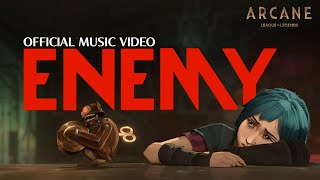
Watch the graffiti-style title around 0:24 and how scenes of Vi and Powder's childhood are cut to the chorus, with glitchy colour-split frames landing on the verse beats.
Class question
Which cuts land exactly on a beat or lyric, and which deliberately miss it, and what does each choice do?
Watch the map-browser frame stay fixed while each click jumps to a different live-action location, with cartoon characters appearing inside the real footage.
Class question
How does keeping the same on-screen interface frame let the clip jump between wildly different places without feeling random?
New clip: Same series; the previous clip ran 5:21, so a shorter official Cartoon Network clip that is built entirely on mixing cartoon characters with live-action footage is used.
Watch the coach's flat, centred two-shot hold while he explains the rules, broken by the chalk-diagram inserts of the pitch and a quick burst of the game itself.
Class question
Why is the explanation funnier when the editor cuts to diagrams instead of showing the game?
Watch the cutting alternate between the origami figures acting out the legend and the villagers' faces reacting, so the crowd becomes the audience inside the film.
Class question
What do the crowd reaction shots add to the origami story that the paper figures cannot show alone?
New clip: Same film; the previous link showed only the studio logos, so LAIKA's official clip of Kubo's origami storytelling in the village is used instead.
06
Animated Promos, Titles & Short-Form
5 references
Technique exercise: watch one clip below twice, once for the story and once counting the cuts. Log three cut points against its "watch for" note, say what each cut does, and propose one alternate cut.
New clip: Same work as the original record (Arcane season 1 trailer); the previous link was the season 2 trailer, now replaced with Netflix's official season 1 trailer.
Watch the trailer hold back each famous character and game image (Peach, Bowser, the side-scrolling pipe shot, Rainbow Road) and release them one by one, with a 'This April' card around 1:24 before the final rush.
Class question
Which game references are saved for the end, and why place the most recognisable ones there?
Watch the trailer flip between serious knight drama and Nimona's chaotic shape-shifting gags, then return after the release-date card around 2:21 for a final comic exchange.
Class question
Why put a joke after the title and date card instead of ending on the biggest action shot?
Watch quiet character close-ups alternate with bursts of sword fighting and fire, punctuated by a 'cinematic masterpiece' card around 0:53 before the cutting speeds up toward the end card.
Class question
How does the trailer balance story (who she is) against spectacle (the fights) as it builds?
New clip: Same series as the original record (Blue Eye Samurai trailer); the previous link was the season 2 teaser, now Netflix's official season 1 trailer.
Watch the long, quiet rooftop and home scenes in the first half give way to rapid cuts between differently styled worlds and Spider-People in the second half.
Class question
What visual cues (colour, line style, framing) tell you which world each shot belongs to when the cuts get fast?

 4:11