Versi untuk kelas & Claude · 17 November 2026 · 4 kategori × 30 = 120 rujukan
Penting: Label gaya ialah nama deskriptif untuk analisis pengajaran, bukan nama rasmi industri kecuali tajuk kempen atau nama pembikin yang dinyatakan. Setiap contoh ialah karya/produk/kempen rujukan, bukan dakwaan bahawa editor iklan itu merupakan editor filem panjang. Pautan sampel ialah carian YouTube yang disasarkan, bukan direct-link video yang semuanya telah disahkan.
30 references
01
Creator Food B-Roll
5 references
Technique exercise: watch one clip below twice, once for the story and once counting the cuts. Log three cut points against its "watch for" note, say what each cut does, and propose one alternate cut.
Watch how hand and ingredient movements carry each cut (the flour blur around 0:05, the sauce swirl into the overhead pizza) so the whole build from dough to oven feels like one continuous throw.
Class question
Which transitions are hidden inside a movement in the frame, and how does that change the pace compared with plain cuts?
New clip: Same Schiffer Pico Pizza b-roll; the creator only posts it inside a 10-minute behind-the-scenes tutorial, so this 29-second upload of the finished piece (cut times match the tutorial's opening) replaces the tutorial.
Replaced: Schiffer's coffee piece exists only inside long tutorials; Binging with Babish's Ratatouille episode is a widely known creator food video with a signature edit and an official upload under 5 minutes.
Original reference: Daniel Schiffer — Coffee B-Roll
New clip: Same McKinnon coffee b-roll; his official upload buries it inside a 15-minute tutorial, so this 29-second upload of the finished piece (cut spacing matches the tutorial) replaces a vlog that was not the reference.
Replaced: Joshua Weissman's own videos all run far past 5 minutes and the current link was another creator's video; Epic Meal Time is the iconic early-YouTube example of hyperfast, comedic food inserts.
Original reference: Joshua Weissman — Cooking Videos
02
Documentary Cuisine
5 references
Technique exercise: watch one clip below twice, once for the story and once counting the cuts. Log three cut points against its "watch for" note, say what each cut does, and propose one alternate cut.
Watch how slow-motion plates and kitchen details are cut tighter and tighter to the classical score, with credits riding on the food, before returning to the empty dining table for the title.
Class question
How does cutting slow-motion images to a fast classical score make food feel like high art?
Kept: The Chef's Table title sequence is the defining food-documentary opener; Netflix has no standalone official upload, so this clean 63-second copy of the Volume 1 opening stays.
Watch how text cards laid over single pieces of sushi state the stakes, then interview lines and quiet hand close-ups build the portrait of an obsessive master.
Class question
Why does placing the big claims as text over one still piece of sushi feel more convincing than a narrator saying them?
Watch the busy market montage alternate with calm portraits of the cooks, while bold yellow words like 'Local Heroes' and country names punch in over the images.
Class question
How does the trailer balance crowded street energy with intimate portraits of single people?
Watch how the camera never cuts for about the first 1:37, whipping between Sydney, Carmy and Richie as overlapping shouting and ticket printers keep the pressure rising.
Class question
What does refusing to cut do to the audience's stress level in a kitchen scene?
New clip: Same series, but this official FX clip shows the show's most famous kitchen-chaos device: an unbroken handheld take through the overloaded service, replacing a more conventionally cut scene.
03
Provocative & Conceptual
5 references
Technique exercise: watch one clip below twice, once for the story and once counting the cuts. Log three cut points against its "watch for" note, say what each cut does, and propose one alternate cut.
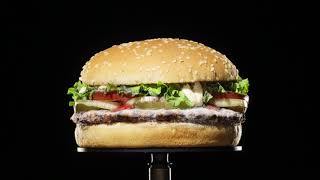
Watch one locked-off burger on a black stage age through a time-lapse while a small day counter ticks up, with just a few macro inserts of mould before the single line of copy.
Class question
Why does showing the product rotting, with almost no cutting, sell 'no artificial preservatives' better than any beauty shot?
New clip: Same Moldy Whopper film; the current link was a local TV news report, replaced by The One Club's upload of the ad itself (Burger King posts no standalone copy).
Watch quick 'based on true events' vignettes of people who smuggle, tattoo and hoard Heinz, mixing fisheye, CCTV and home-video textures before the giant HEINZ logo button.
Class question
How does switching between camera textures (CCTV, camcorder, cinema) make the fan stories feel real?
Watch people around the world drawing 'ketchup' on video calls and at desks, a split-screen grid of results, and red text cards that set up the 'except this guy' twist.
Class question
How do the red text cards structure the experiment so the reveal of almost every drawing lands as a punchline?
Watch the bottle get handed from one painting to the next, each throw or reach carrying the cut into a new art style until it lands in the student's hand.
Class question
How does passing a single object through the frame let the edit jump between completely different visual worlds without feeling jarring?
Watch the cuts thin out after the opening scenes: from around 0:48 the camera follows the growing dance crowd without cutting until the giant chicken reveal.
Class question
Why does an unbroken, swelling crowd shot make the absurd chicken payoff feel more like a mass event?
Kept: Official KFC UK & Ireland upload of Believe in Chicken, already a fitting short spot.
04
Quick-Service Storytelling
5 references
Technique exercise: watch one clip below twice, once for the story and once counting the cuts. Log three cut points against its "watch for" note, say what each cut does, and propose one alternate cut.
Watch the same top-down red tray hold its place while the order and caption change on every beat, running from real celebrities to fictional characters and finally 'The fans'.
Class question
How does keeping the composition identical in every shot turn a simple product list into a joke with a rhythm?
Watch the raised-eyebrow look passed from one co-worker to the next in reaction close-ups until the whole office floods the stairs, with no line of dialogue before 'Fancy a McDonald's?'.
Class question
How does cutting between glances alone tell the audience what everyone is thinking?
Watch the low-angle hero shots of a strutting chicken cut hard to the music, ending on three type cards: 'The chicken', 'The whole chicken', 'And nothing but the chicken'.
Class question
What does treating a live chicken like a swaggering music-video star do to the brand's message about real ingredients?
Watch the ad borrow full thriller-trailer grammar (dark interiors, evidence close-ups of nacho fries, rising pace and a car crash) before landing on the '$1 Nacho Fries' end card.
Class question
Which trailer conventions does the spot copy, and why does the joke depend on doing them completely straight?
Kept: Taco Bell's 2018 'Web of Fries' fake thriller trailer is the canonical trailer-parody food ad; no official Taco Bell upload exists, so this complete copy stays.
Watch the setup play as a normal sports scene with Betty White taking the hits, then the bite of Snickers swaps her for the real player, and a final tackle on Abe Vigoda lands as the button.
Class question
How does the extra gag after the product moment make the brand line easier to remember?
New clip: Same 'You're Not You When You're Hungry' campaign, relinked from a generic regional TVC to its famous 2010 Super Bowl launch spot with Betty White.
05
Sensory & Premium
5 references
Technique exercise: watch one clip below twice, once for the story and once counting the cuts. Log three cut points against its "watch for" note, say what each cut does, and propose one alternate cut.
Watch everyday scenes (a station platform, a TV shop, a family dinner) cut to glistening slow macro food inserts while the voice-over carries the sentence across each cut.
Class question
How does the voice-over bridge ordinary life and the food close-ups so the product shots feel earned rather than inserted?
Watch ordinary ingredients shot like planets and spacecraft (romanesco, whisks, gas flames, floating potatoes) cut against the home cook's heroic close-ups, building to the flambé.
Class question
What does treating ingredients like epic sci-fi objects do to the viewer's idea of everyday cooking?
Kept: Lurpak's 'Adventure Awaits' (Cook's Range launch) is a widely cited premium food spot; no Lurpak upload exists, and this cinema-distributor copy is complete.
Watch Clooney's reactions as he overhears two women describe the coffee, cut against macro inserts of the machine and crema, before the twist that they were talking about Nespresso.
Class question
How do Clooney's reaction shots set up the misunderstanding that pays off in 'What else?'?
Kept: George Clooney's original 'What else?' boutique spot is the defining Nespresso film; Nespresso has no standalone official upload of it, and this copy is complete.
Watch each on-screen word carry over into the next shot ('Ice with friends', 'Friends with stories', 'Stories...') so the type links every vignette back to Coca-Cola.
Class question
How does a chained line of text turn unrelated life moments into one continuous thought?
Watch green title cards pose the question, then real moments from cafés around the world are labelled with single words like 'New love', 'Respect' and 'Reconciliation'.
Class question
How do the one-word labels turn documentary moments into an emotional argument for the brand?
New clip: The current link was a student project; this is Starbucks' own upload of the 2014 'Meet Me at Starbucks' film shot in 28 countries in one day.
06
Story & Animation
5 references
Technique exercise: watch one clip below twice, once for the story and once counting the cuts. Log three cut points against its "watch for" note, say what each cut does, and propose one alternate cut.
Watch the camera glide sideways through the whole stop-motion farm story without a single cut, as the farm turns into a factory and then back again to where it began.
Class question
How does one continuous camera move make the farmer's change of heart feel like a full circle?
New clip: Same Back to the Start film; the current link was a behind-the-scenes video, replaced by the complete 2-minute animation (Chipotle posts no standalone copy).
Watch how the factory horrors are shown through the scarecrow's sad reaction close-ups, then the grey palette warms into a sunlit farm and kitchen once he picks the pepper.
Class question
How do the scarecrow's reaction shots and the shift in colour carry the story without dialogue?
New clip: The current link was a different, later Chipotle film (A Future Begins); this is the 2013 Scarecrow animation itself, uploaded with its original app end card.
Watch the song's lyrics become giant hand-drawn words ('BAD', 'CAVE', 'CREEPY SHOW') that the flat animated wolf, vampire and shark interact with on every line.
Class question
How does turning lyrics into animated type keep the viewer singing along with the brand message?
Watch the shop scene built from close shot-reverse-shots between the girl and the shopkeeper, with an insert of her trinkets on the counter, before the quiet reveal outside with her mum.
Class question
How do the shopkeeper's reaction shots tell us his decision before he says or does anything?
Watch the trucks first glimpsed as lights through dark trees, then revealed in close detail and wide valley shots, building to the townsfolk's reactions and the 'Always' Santa end card.
Class question
How does delaying the full view of the trucks turn a delivery convoy into a Christmas event?

 0:29